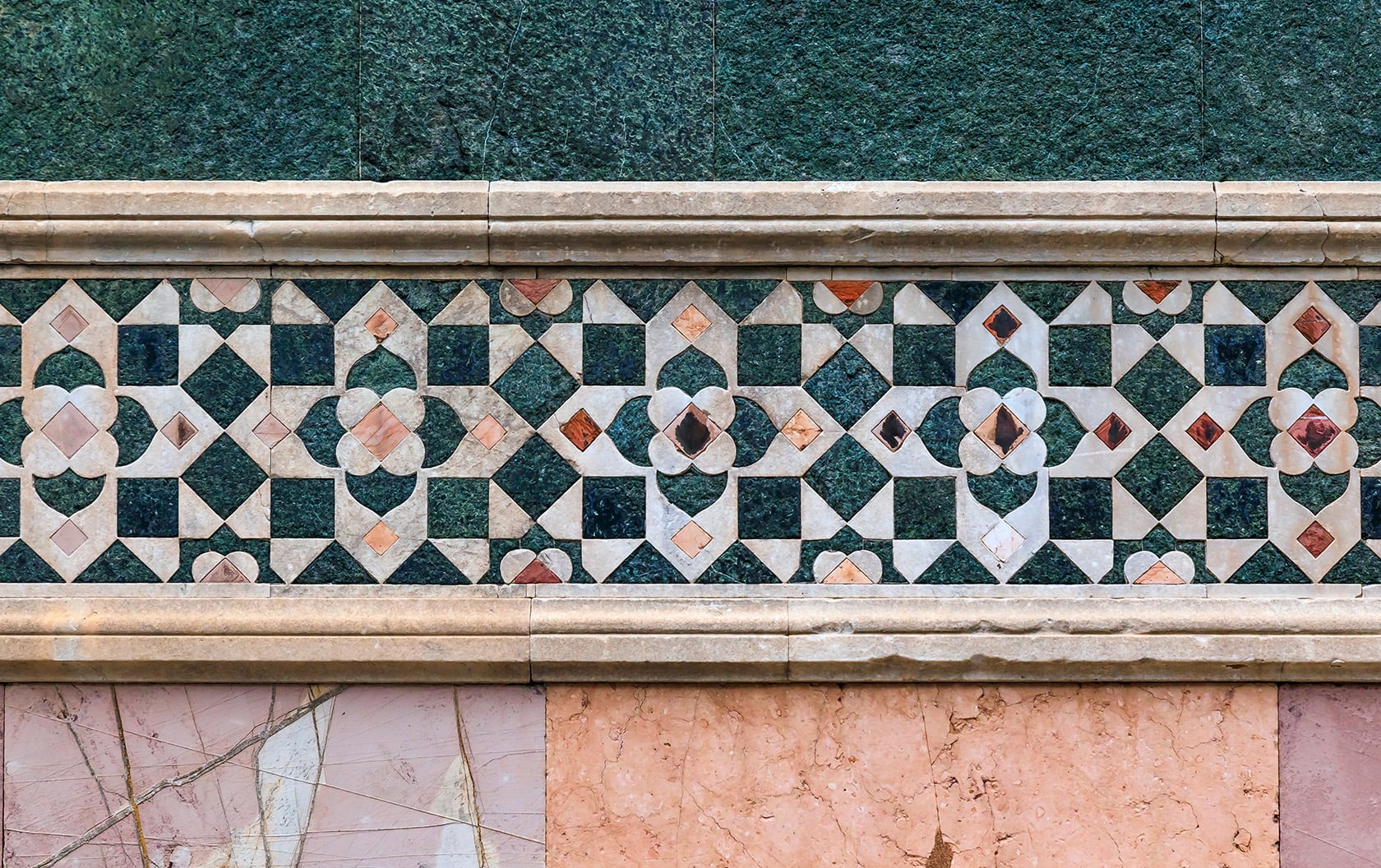
Look closely as you stroll through Florence and you’ll start to notice how many of the city’s most remarkable details are created from stone. The Baptistery, Duomo and Giotto’s Bell Tower are among the most striking, with their intricate geometric patterns of white, green and rose-colored marble.
But Florence’s connection with precious stones doesn’t end with its architecture. From jewels captured in Renaissance portraits to intricate pictures composed entirely of stone, you’ll find examples of extraordinary craftsmanship throughout the city’s museums, churches and workshops. Inspired by our newest collection of Florence vacation rentals named after gemstones, we became curious about the role these precious materials have played in the city’s art and history. Follow our gemstone-inspired guide to some of the treasures worth seeking out on your next stay in Florence.
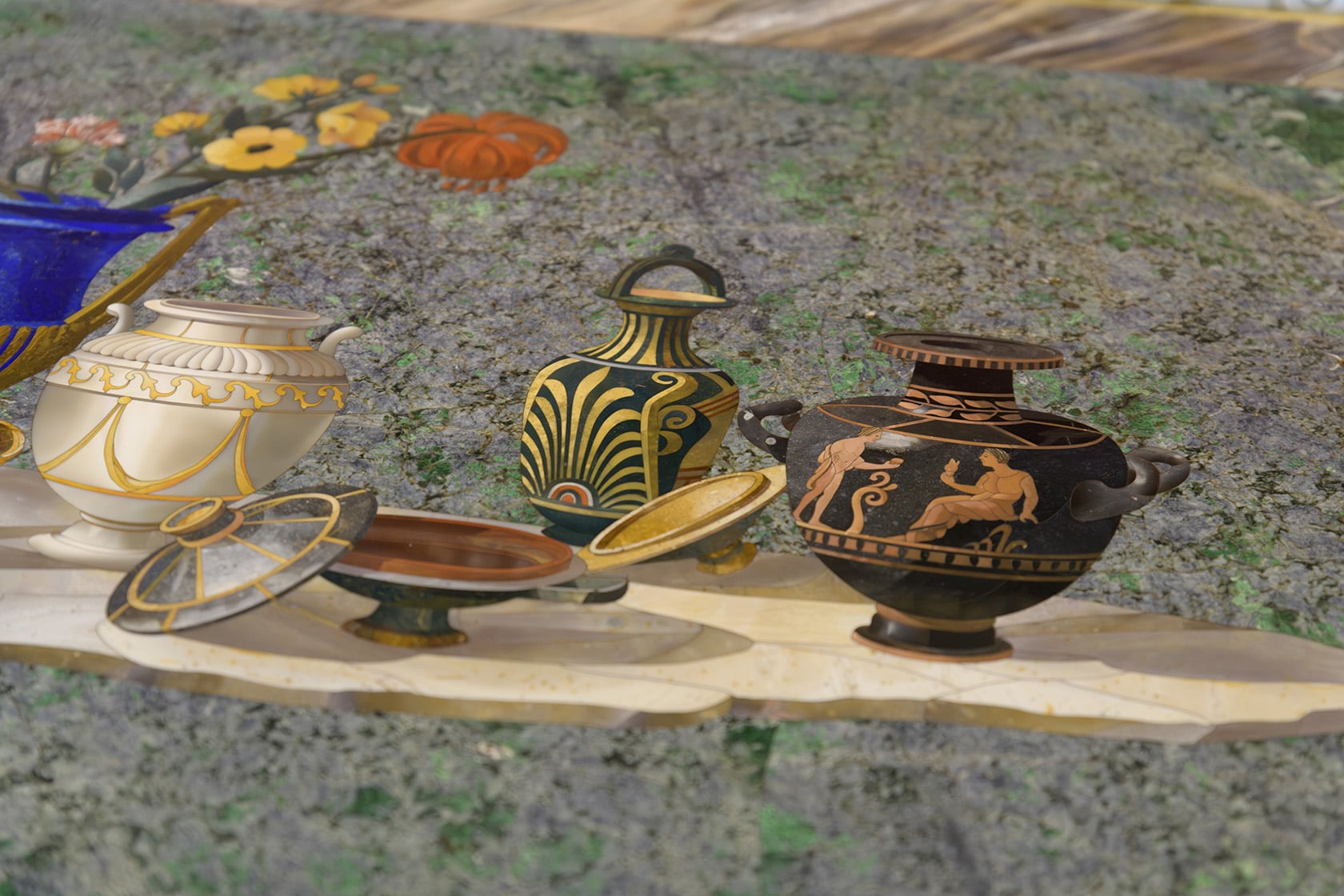
Exquisite pietre dure craftsmanship at the Palazzo Pitti.
Imagine creating a painting without paint. In the Florentine tradition known as commesso, or pietre dure, carefully cut pieces of colored stone are fitted together to create extraordinarily detailed designs, with the natural shades, patterns and veining of the stone becoming part of the finished image.
The Museo dell’Opificio delle Pietre Dure is the place to see this craftsmanship up close. The museum traces its history to the grand-ducal workshop established in 1588 by Ferdinando I de’ Medici for the creation of works in semi-precious stone. Its collection spans three centuries of this distinctive Florentine tradition.
The artistry is all in the details. Each petal, leaf and tiny detail is formed from a carefully selected piece of stone. The museum’s historic stone samples, workbenches and tools also give a sense of the extraordinary care involved in creating these works. Even better, the museum is not on the radar for many travelers, so it’s often a peaceful experience looking closely at the marvelous creations.
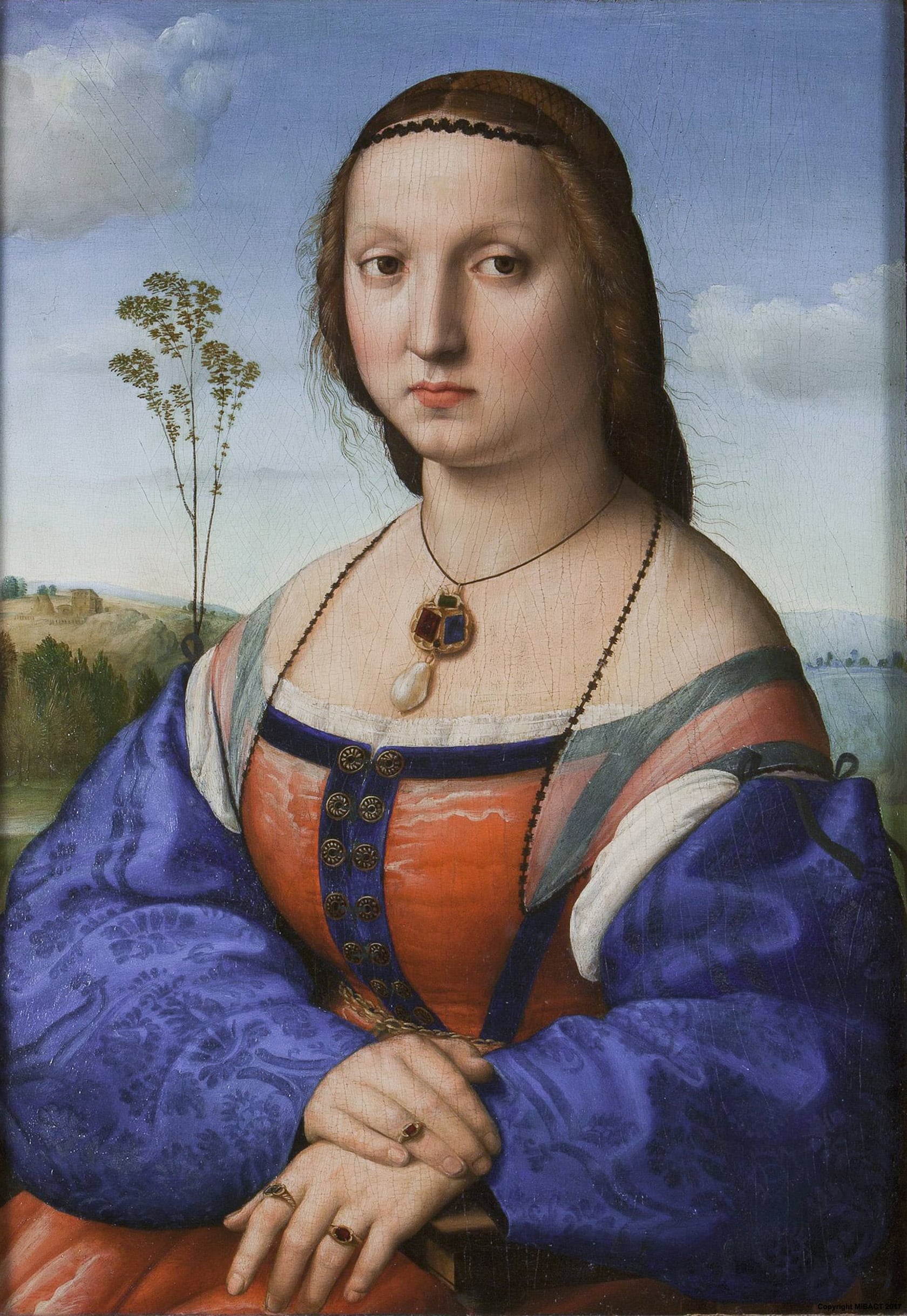
Raphael’s Portrait of Maddalena Doni (Credit)
Some of Florence’s most captivating jewels are hiding in plain sight at the Uffizi. In Raphael’s Portrait of Maddalena Doni, painted during his Florentine period around 1504–07, the sitter wears an elaborate pendant set with a ruby, emerald, sapphire and a large pearl. The jewelry is not simply decoration. Precious stones and pearls carried associations with virtue, purity and marriage in Renaissance culture, making the pendant an especially fitting detail in a portrait of the newly married Florentine noblewoman.
And there’s much more to spot beyond Raphael’s portrait. The Uffizi’s online exhibition Jewels in the Uffizi brings together more examples and explores the stories and symbolism behind the jewelry depicted in Renaissance paintings, a perfect place to start if you can’t make it to Florence just yet.
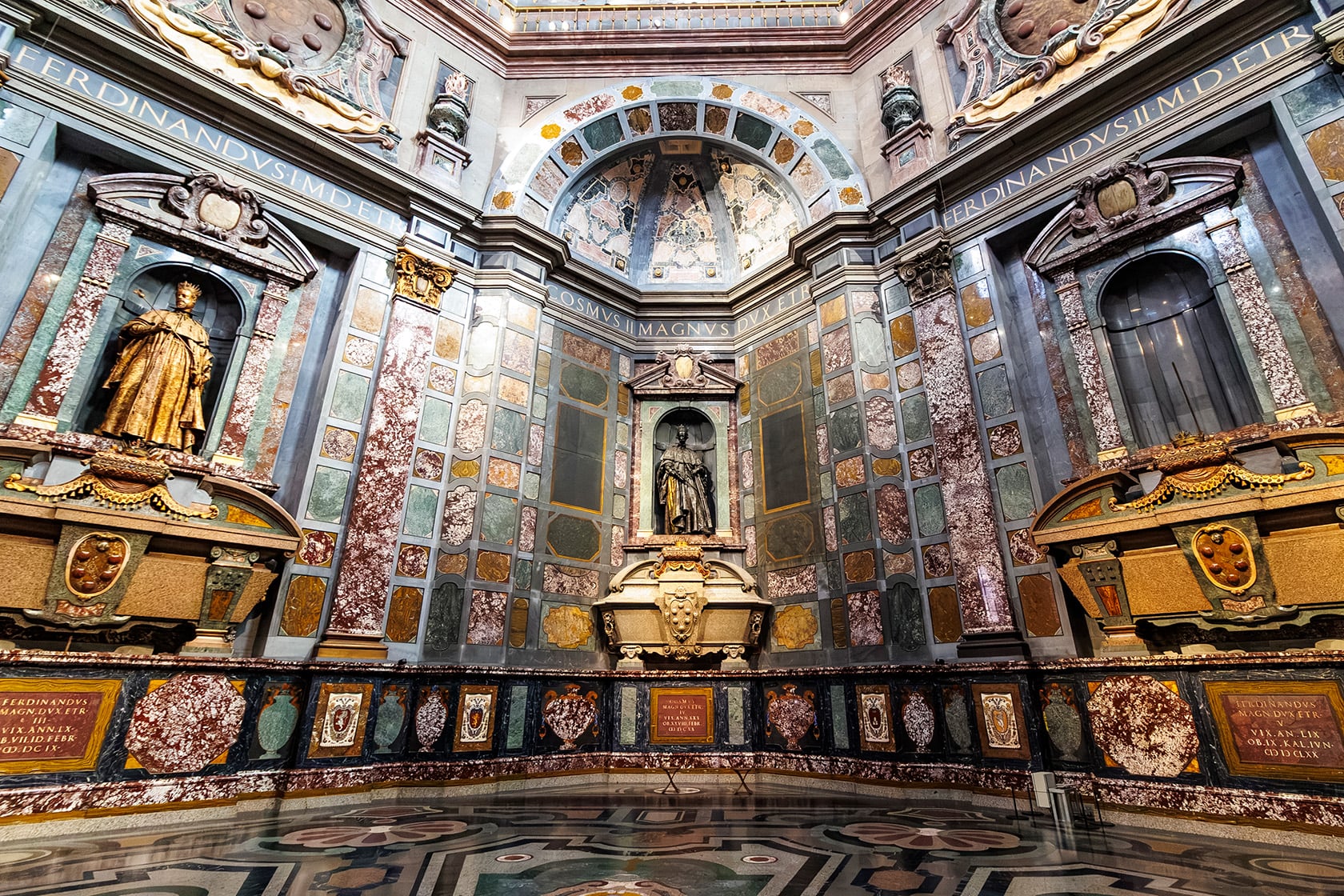
Ornate Chapel of the Princes in San Lorenzo.
For the Medici, precious stones were much more than beautiful objects. They collected ancient engraved gems and commissioned elaborate works in precious and semi-precious stones, leaving a legacy that can still be seen in Florence’s museums and monuments today.
At the National Archaeological Museum of Florence, 432 gems from the historic Medici and Lorraine collections are displayed in a corridor created for Maria Maddalena de’ Medici. Spanning centuries, the collection includes seals, cameos, intaglios and rings carved from stones such as chalcedony, sardonyx, carnelian, sapphire and garnet. And those 432 gems are only a glimpse of the museum’s collection of some 2,300 pieces.
The Medici love of precious stones takes on an entirely different scale at the Chapel of the Princes beside the Basilica of San Lorenzo. Almost every surface of the grand family mausoleum is decorated with colored marble and elaborate stone inlay. Look for the coats of arms of 16 Tuscan cities, created with materials including mother-of-pearl, lapis lazuli and coral.
There’s a fascinating connection to the pietre dure tradition too. The grand-ducal workshop established in 1588 spent centuries working on the decoration of the Chapel of the Princes, bringing together two very different expressions of Florence’s long tradition of working with stone.
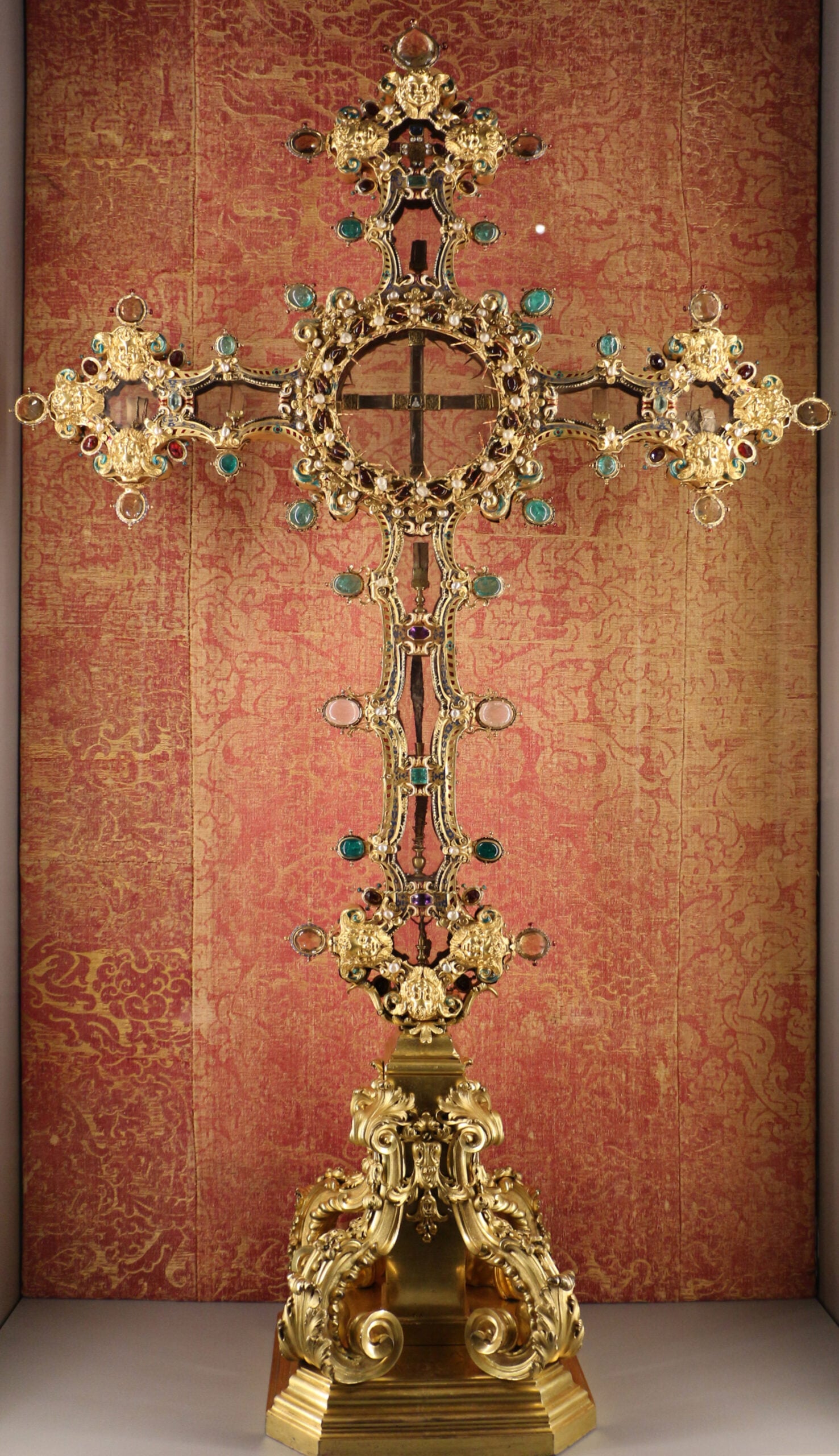
The Cross of the Grand Duchess at the Museo dell’Opera del Duomo. (Credit)
The Museo dell’Opera del Duomo is easy to overlook beside the soaring beauty of the Duomo, but it is one of Florence’s most rewarding museums. Its collection brings together works created over 720 years for the Cathedral, Baptistery and Giotto’s Bell Tower, including masterpieces by Michelangelo, Donatello and Ghiberti. Among its more unexpected treasures is the Croce della Granduchessa, or Cross of the Grand Duchess.
Standing over four feet tall, this elaborate reliquary was created and embellished over several centuries. Its gold framework is decorated with enamel, pearls, garnets and other gems, while rock crystal reveals sacred relics associated with the Passion of Christ.
Look toward the top and you’ll spot a large almond-cut stone intended to reproduce the legendary Florentine Diamond. The spectacular yellow diamond once belonged to the Medici, weighed 137 carats and disappeared in the early 20th century. This Indian topaz stone on the cross is the only surviving visual record of this lost Medici treasure.
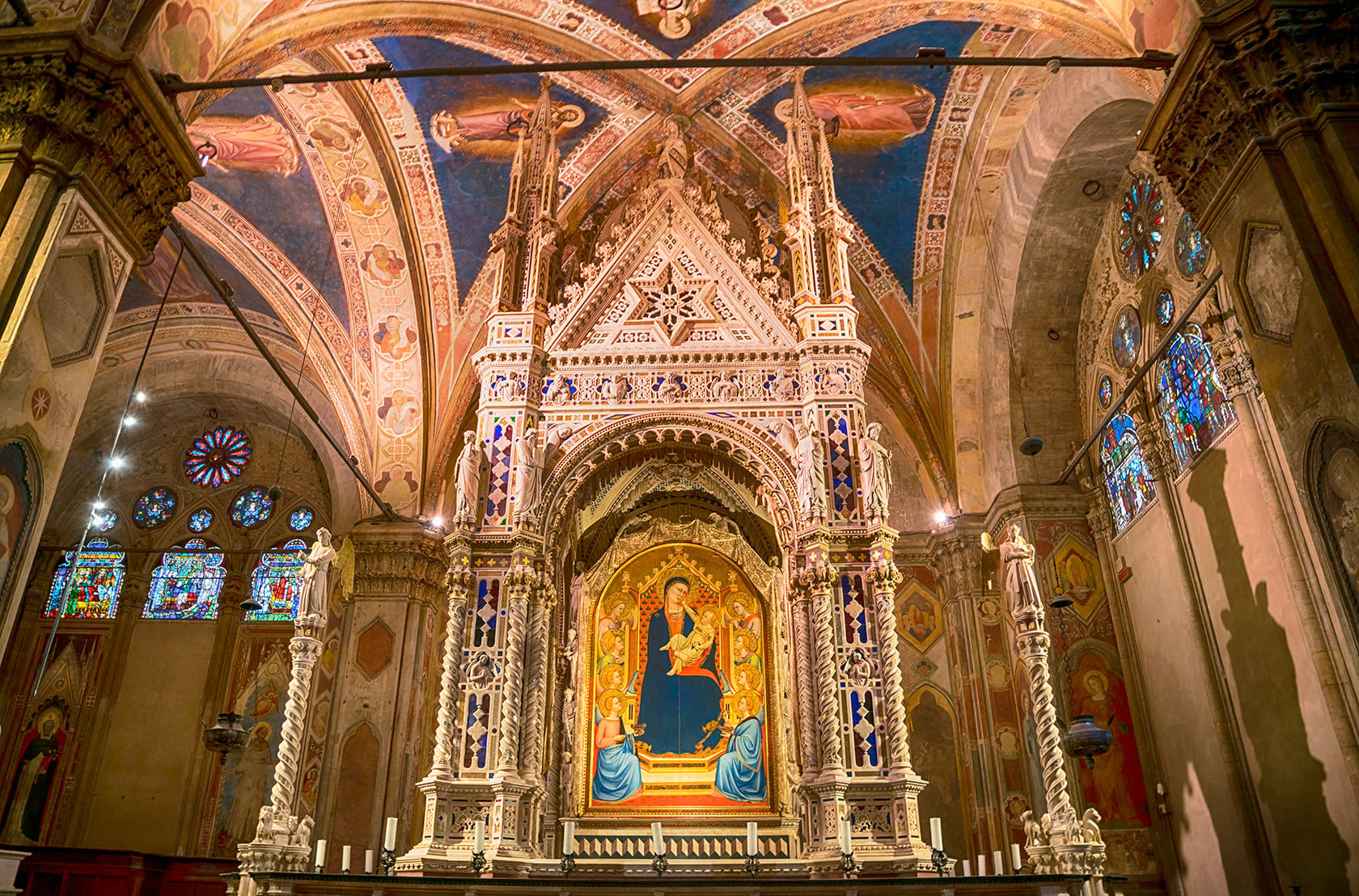
Inside Orsanmichele, Andrea Orcagna’s magnificent Gothic tabernacle has all the intricacy of an enormous piece of jewelry. Created in the 14th century to house a revered image of the Madonna and Child, the elaborate marble structure is enriched with touches of lapis lazuli, gold and colored glass.
Elaborately carved figures, architectural details and delicate decorative work surround the painting, while flashes of deep blue and gold stand out against the pale marble. Completed in 1359, it’s a striking example of how precious materials were used to bring color and brilliance to medieval Florence.
But don’t leave Orsanmichele without exploring the rest of this unusual building. The niches around the exterior were created for statues of patron saints commissioned by Florence’s powerful guilds, with works by artists including Donatello, Ghiberti and Verrocchio. Many of the originals can now be seen up close in the museum on the upper floors, where the large windows also offer an incredible panorama over Florence.
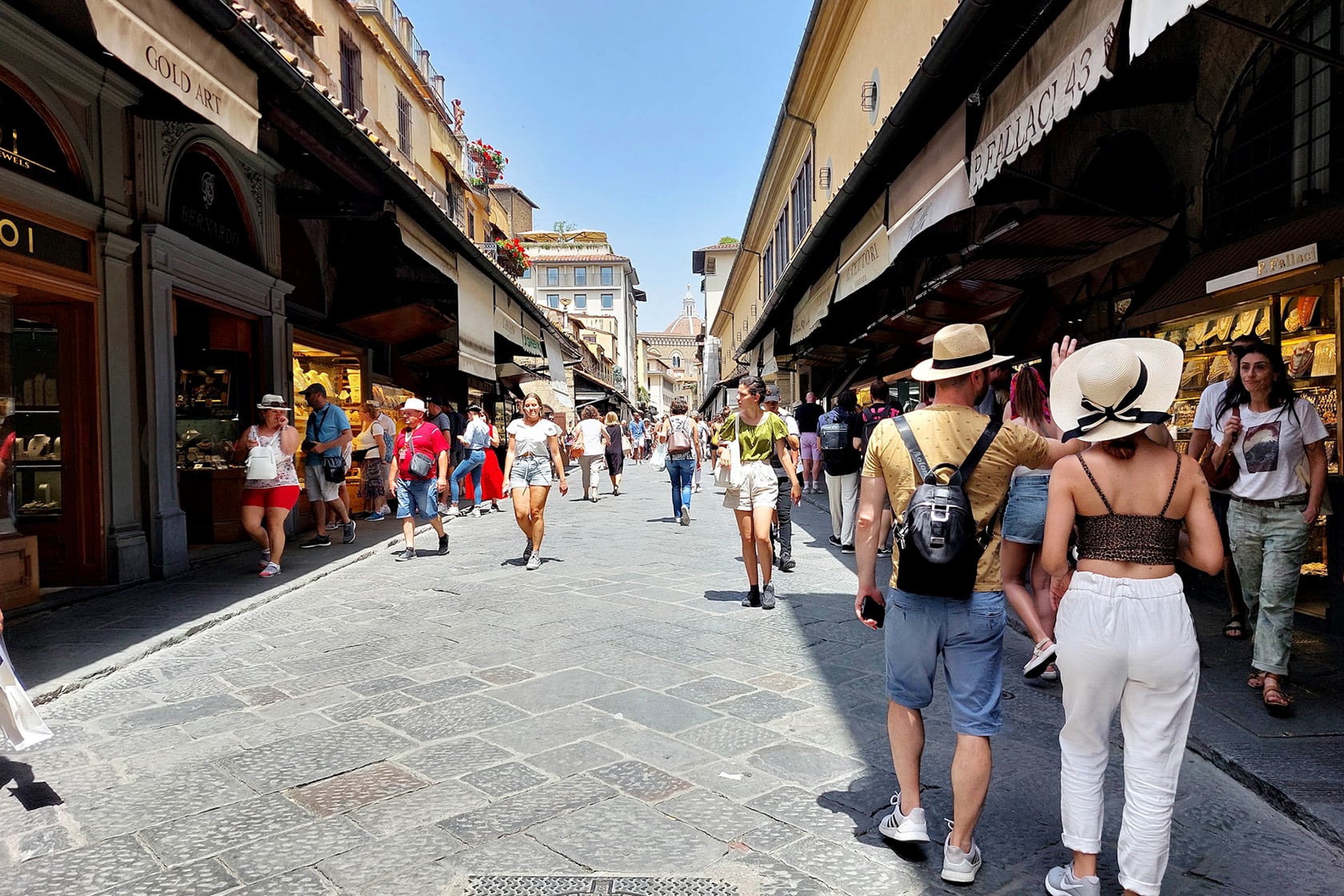
All the tempting jewelry shops along the Ponte Vecchio.
Florence’s long tradition of goldsmithing is very much alive today. Across the city, artisans continue to work by hand with precious metals and stones, sometimes preserving techniques passed down through generations and sometimes taking them in entirely new directions.
At Pestelli Creazioni, Tommaso Pestelli represents the fourth generation of a Florentine goldsmith family whose history dates to 1908. His own training included sculpture at the Academy of Fine Arts and the restoration of historic goldsmithing and ancient engraved gems at the Opificio delle Pietre Dure. Today, he and his wife Eva Aulmann create their pieces in an atelier with an open workshop, where visitors can see them at work.
On the Ponte Vecchio, Fratelli Piccini offers another beautiful link between Florence’s artistic past and its jewelry-making traditions. The Bloom collection takes inspiration from the flowers in Botticelli’s Primavera and The Birth of Venus, transforming details from the paintings into hand-engraved gold and colorful hand-painted enamel.
Paolo Penko also looks to the city itself for inspiration. His handmade jewelry draws on the paintings, sculpture and architecture of Renaissance Florence, while traditional techniques such as engraving and chiseling are combined with contemporary design.
View this post on Instagram
Cross the Arno and you’ll find another side of Florence’s jewelry scene in the Oltrarno, a neighborhood where a younger generation of makers is building on the city’s artisan traditions. Officine Nora is a particularly fun stop. The shared workshop brings together independent jewelry artists from Italy and around the world, each with a distinctive style, and everything in the shop is handmade in Florence in small quantities. You can browse their work or even get behind the workbench yourself through jewelry-making courses and short experiences.
There’s plenty more craftsmanship to explore in the Oltrarno beyond jewelry. Our Artisan Workshop Tour in Florence with Oltrarno Neighborhood takes you into working studios to meet local artisans and see traditional skills and techniques firsthand.
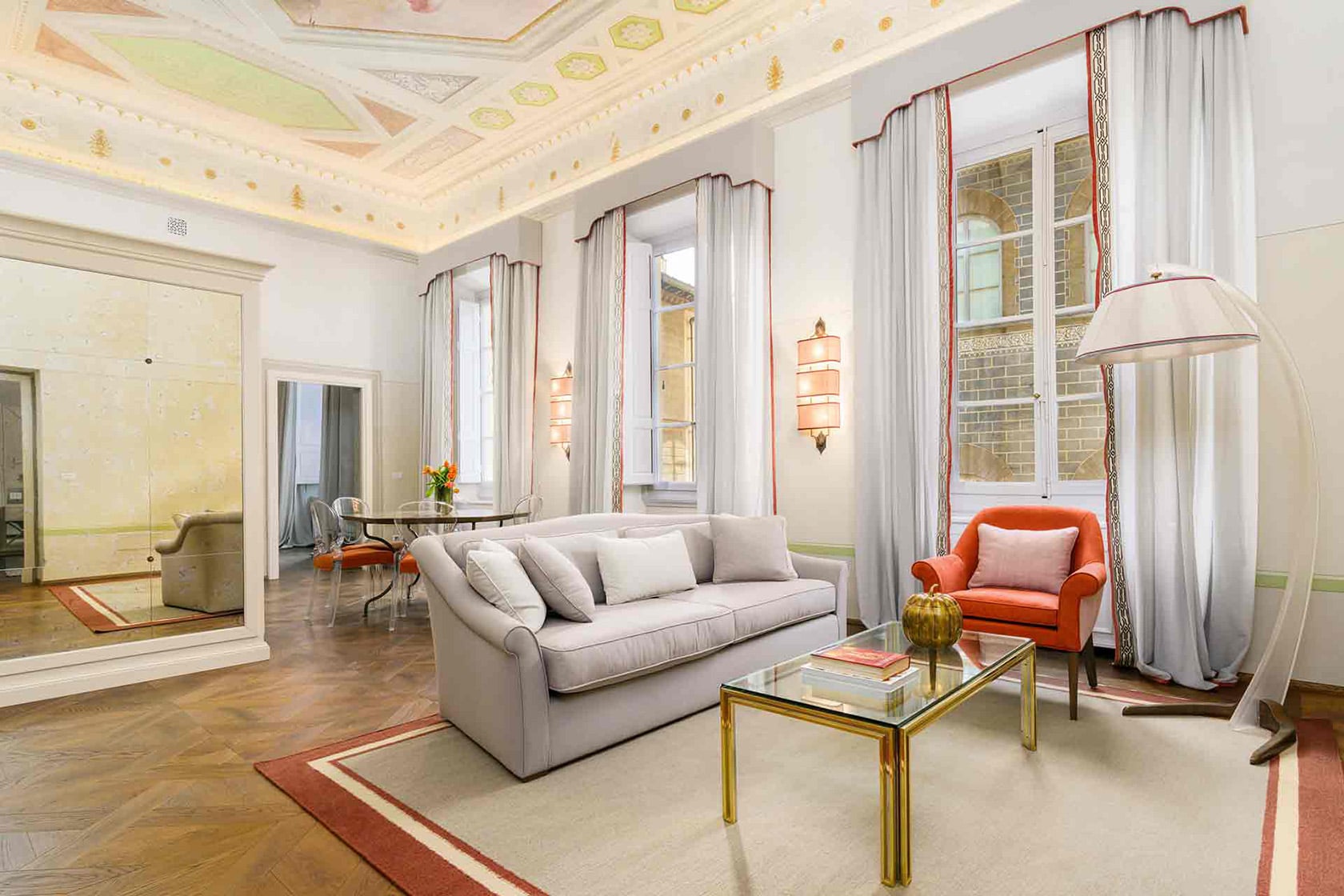
Beautiful frescoed ceilings at the Citrino apartment.
After exploring Florence’s treasures, you can carry the gemstone theme into your stay. Near Piazza Santa Croce, our newest collection brings together ten luxury vacation rentals in one beautifully restored historic palazzo. Having so many apartments under one roof is also ideal for families and groups traveling together, making it easy to stay close while still enjoying the privacy of your own apartment.
The rich colors of the frescoes and interiors inspired the apartments’ gemstone names. Each has its own distinctive character and special features, all in a location that makes it easy to explore the city on foot and return to your own Florentine home at the end of the day.
Take a look at all ten of our new gemstone-inspired apartments and find the perfect one for your next stay in Florence.
The post A Gemstone-Inspired Guide to Florence appeared first on Italy Perfect Travel Blog.