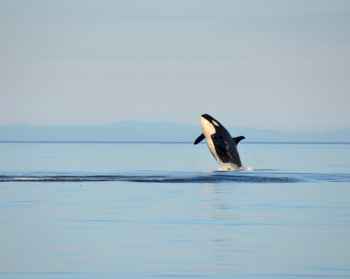
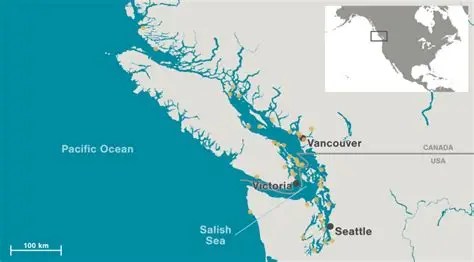
On a recent trip to British Columbia, Canada, I was on a ferry from Victoria to Galiano Island, one of the Southern Gulf Islands. During this trip through the Salish Sea, I was standing on the upper deck of the ferry and looking through my binoculars with the hopes of spotting some interesting wildlife. That is when I saw a small pod of orcas (Orcinus orca) travelling north through the channels.
Orcas are marine mammals that belong to the sub-order odontocetes, or toothed whales. They are also the largest member of the dolphin family. They are characterized by their large black bodies, white markings and long, triangular dorsal fins that can reach up to 6 meters! Orcas are known to be apex predators, highly social and intelligent. Pods are close-knit matriarchal groups with offspring remaining with their mothers for their whole lives. The older females lead the multi-generational pods and provide them with decades of knowledge.
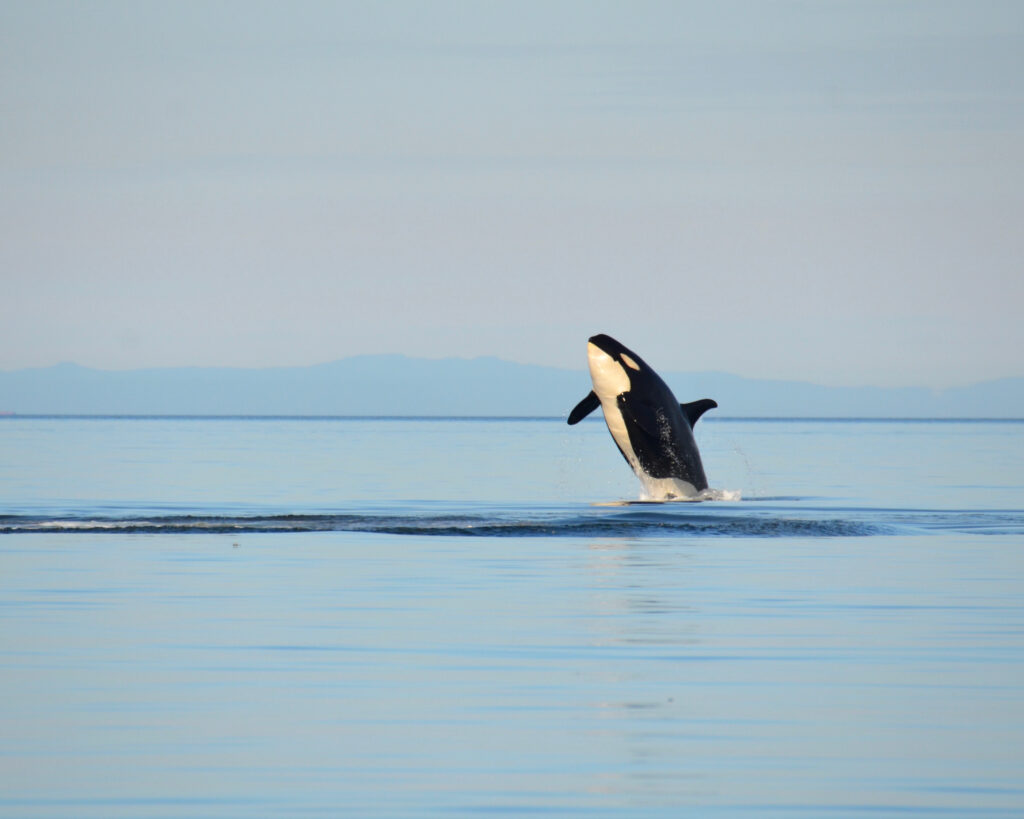
J19 named Shachi. A Member Of J-pod Of The Endangered Southern Resident Killer Whale Community. Photo provided by Nature Canada / Shutterstock
However, not all pods are passing down the same information. Different populations of orcas have unique characteristics, such as their hunting techniques, behavior and diet. These distinct populations are called ecotypes and are genetically isolated from other groups of orcas as they do not interbreed. Yet, they are all still considered one species.
In Canada, there are 5 distinct populations of orcas: the Southern Resident, Northern Resident, West Coast Transient, Offshore, and the Northwestern Atlantic and Eastern Arctic populations. The Southern Resident population are found in the Salish Sea during spring and fall, meaning the pod I saw was likely part of this distinct ecotype.
Southern Resident Orcas / Southern Resident Killer Whales
Southern resident orcas are one of Canada’s most endangered marine mammals. According to the Center for Whale Research, as of 2024 only 73 orcas remain. [Good news update – as of 2025 there are 75 orcas]. This is [still] their lowest population in more than three decades. There are three known pods named the J Pod, K Pod, and L Pod which have 25, 15 and 33 orcs in each, respectively. The Commitee on the Status of Endangered Wildlife in Canada (COSEWIC) lists this ecotype of orcas as endangered.
In Canada, orcas are protected by Marine Mammal Regulations under the Fisheries Act. It is illegal to harm, harass or kill any orca in Canadian waters. However, there are still other threats to their survival such as lack of food, chemically contaminated prey, oil spills, sound pollution and ship strikes.
Orcas rely on a quiet ocean to hear each other’s echolocation. Disturbances in their communication leads to difficulty navigating, foraging and socializing which are crucial to their survival. Learning this information has since made me question the extent of the ferries’ impact on the orcas of the Salish Sea. As the ferries are essentially the only way to travel between the islands, they are constantly operating and thus contributing to the noise pollution issue. How harmful is this anthropogenic stressor on an already struggling population?
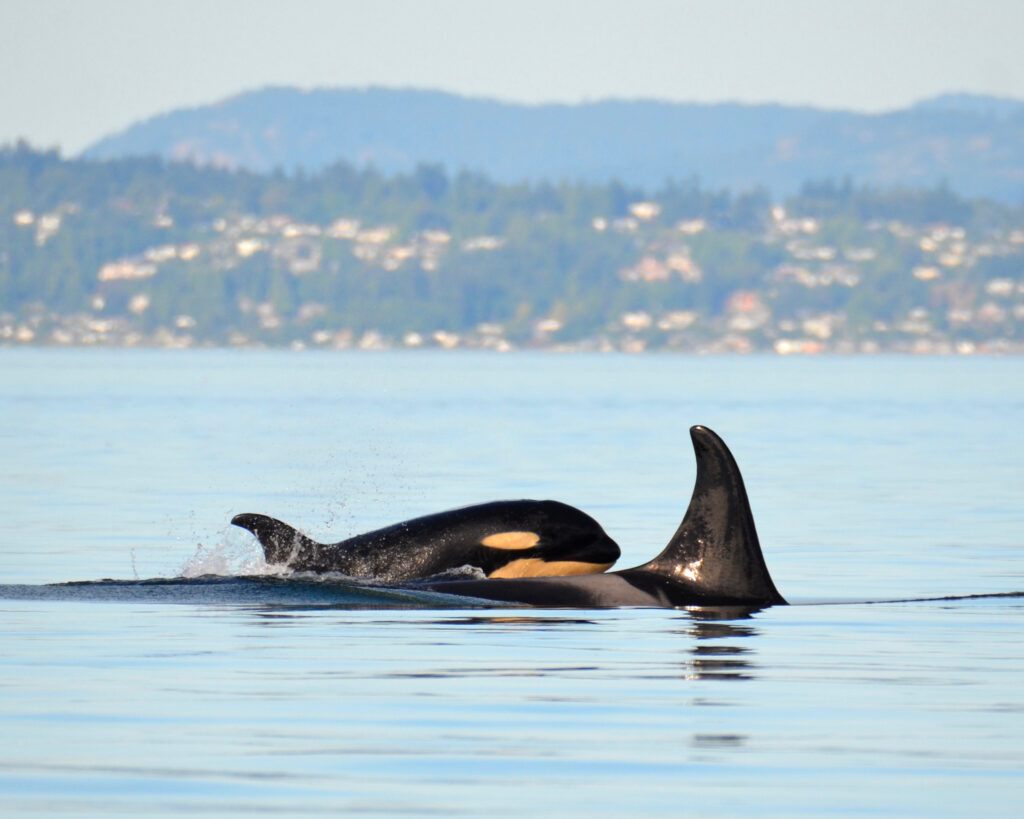
J17 named Princess Angeline – A Member Of J-pod in the Endangered. Photo provided by Nature Canada / Shutterstock
I am deeply grateful to have witnessed this magnificent species in the wild, as it was something I have never seen before. I hope these orcas continue to be resilient in the face of a changing world and that Canada continues to find ways to further protect them so that they can keep passing on their knowledge and wisdom for generations to come.
__
Thank you to Tessa Carlin for allowing us to repost her “My Marine Journey” – Orcas in the Salish Sea Blog.
Did you know?
A strong network of Marine Protected Areas will work to reduce habitat degradation, slow the loss of endangered species, and restore depleted fish stocks. It’s clear that protecting 30 percent of our ocean by 2030 will go a long way to ensure Canada preserves the nature and way of life we know and love.
Your voice for nature has never been more imperative.
Let the Minister of Fisheries know that protecting our oceans is important to you.
Sources:
- Orca – Oceana Canada
- Orca – Nature Canada
- Facts about orcas (killer whales) – Whale & Dolphin Conservation USA
- Orca – Gulf Islands Guide
- Are Orcas Dolphins? Learn About Killer Whales | Captain Dave’s
- Get to know the Salish Sea orcas – David Suzuki Foundation
- Killer Whale | NOAA Fisheries
- Orca Population