The Hidden Destruction of Trawling
Trawling, whether along the seafloor or through midwater, is one of the most destructive fishing methods on the planet. Bottom trawling drags massive nets across the seafloor, flattening habitats and destroying fragile ecosystems like coral gardens and living sponge reefs almost 10,000 years old. Midwater trawling, targeting species higher in the water column, also captures large amounts of bycatch, including non-target fish, seabirds, and marine mammals.
Some of the largest industrial trawlers now operating off the coast of British Columbia (B.C.) arrived after decades of activity in the Northeast Atlantic, North Sea, Norwegian Sea, and Bering Sea, regions where fish stocks are now in decline. These vessels are built for scale and long voyages, often equipped to process and freeze fish onboard, allowing them to operate far from shore for extended periods.

Graphic by Roan Bohonos (Pacific Wild)
Findings from Dragged to Death
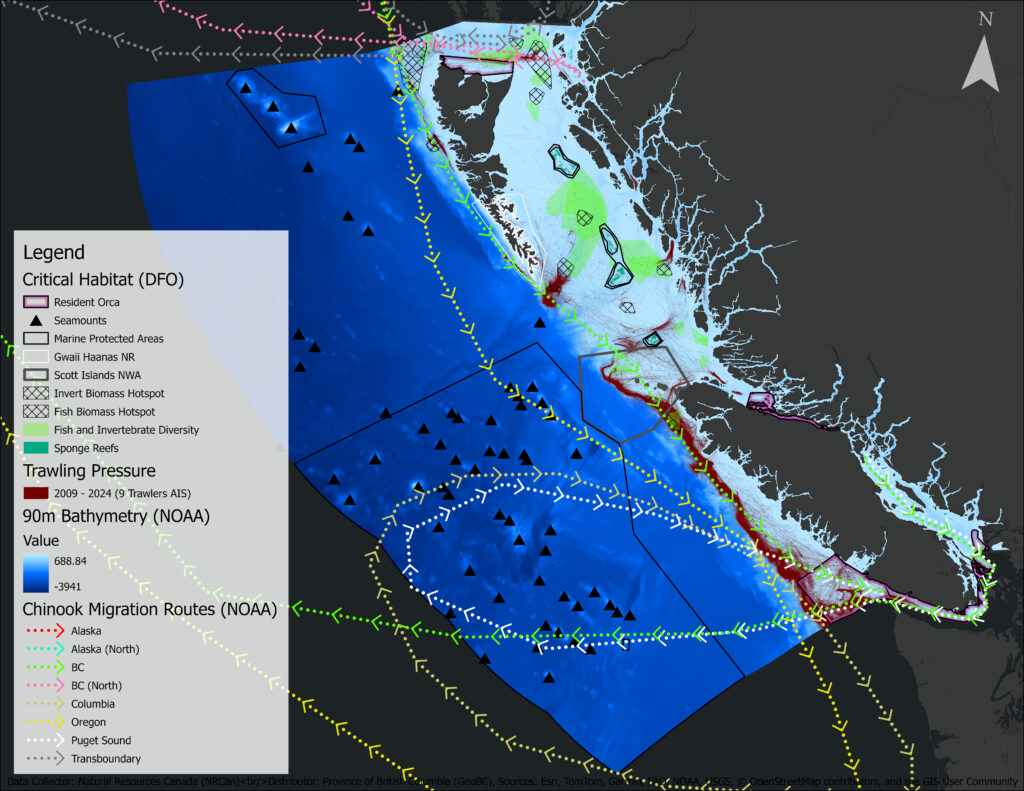
After two years of intensive research, Pacific Wild released Dragged to Death, a trawl mapping project that exposes the true footprint of industrial trawling along the B.C. coast. Using Automatic Identification System (AIS) data, Pacific Wild uncovered what happens in the wake of the nine largest trawlers operating in these waters.The investigation uncovered startling facts.
Between June 2009 and June 2024, nine trawlers travelled 907,680 kilometres — the equivalent of circling the globe more than 22 times. The mapping shows that the cumulative trawling footprint from this small fleet is roughly the size of Ireland. This 3D footprint reflects the toll trawling takes from surface to seafloor, with sweeping losses across ecologically sensitive habitats. Many areas have been trawled repeatedly, compounding habitat destruction and stalling recovery in areas vital to marine biodiversity. Alarmingly, some of this activity overlaps with Marine Protected Areas (MPAs) and ecosystem hotspots, including seamounts, salmon migration corridors, and critical feeding zones for Southern Resident killer whales.
Map by Kevin Lester (on behalf of Pacific Wild)
Bycatch, Midwater, and Bottom Nets
Many industrial trawlers can switch between bottom and midwater fishing gear depending on target species and season. While midwater trawling may seem less destructive, the massive nets are indiscriminate, capturing everything in their path. Over the past decade, trawlers in B.C. have incidentally captured an average of 225 non-target species each year, including marine mammals and endangered basking sharks. Bycatch also includes species of high value to other fisheries and of conservation concern such as Chinook salmon: over the past two years1 nearly 30,000 salmon were reported as bycatch in the groundfish trawl fishery each year.

Photo: Ian McAllister
Why This Matters to You
When industrial vessels trawl massive swaths of seafloor and midwater in our backyard, the consequences ripple outward from coastal communities to entire ocean ecosystems. The fact that protected zones aren’t always off-limits highlights the urgent need for greater oversight, transparency, and enforcement.

Graphic by Roan Bohonos (Pacific Wild)
Take Action Now
You can help shift the balance in favour of ocean health. Learn about these issues, share this story, choose sustainable seafood, and support stronger protections for marine habitats. Stronger monitoring of trawling fleets, transparent reporting, and enforcement of vulnerable areas are crucial. The longer we wait, the harder it will be to reverse the damage. Supporting conservation groups, advocating for policy change, and raising public awareness are all meaningful ways to take action today.
Did you know?
The Canadian government is hiding data on bottom trawling. Ask your MP to publicly call on the Minister of Fisheries to release all vessel-tracking and bycatch data for bottom trawling in Canada’s oceans.