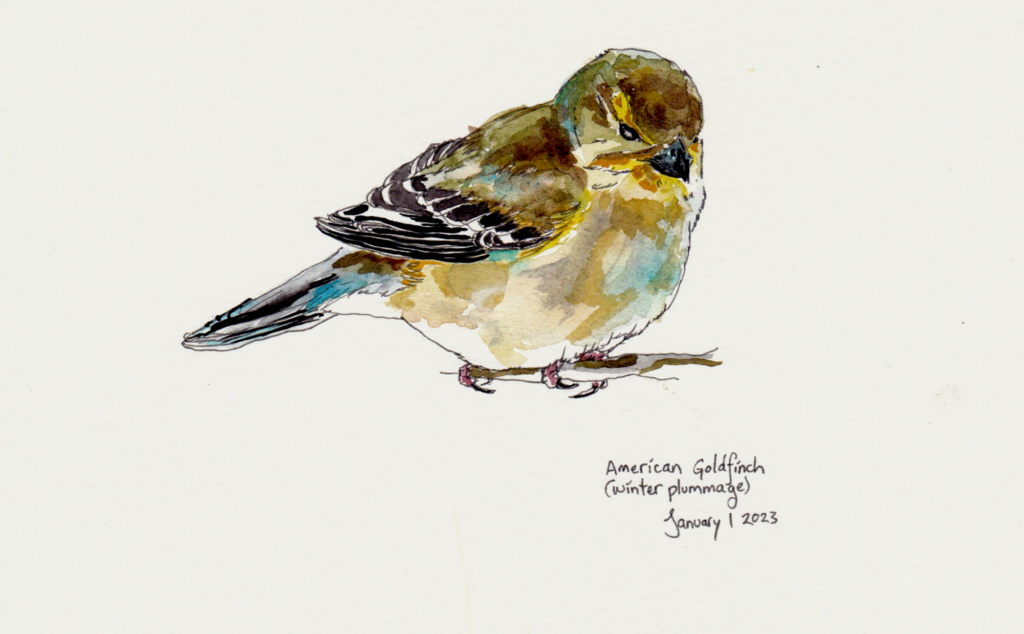
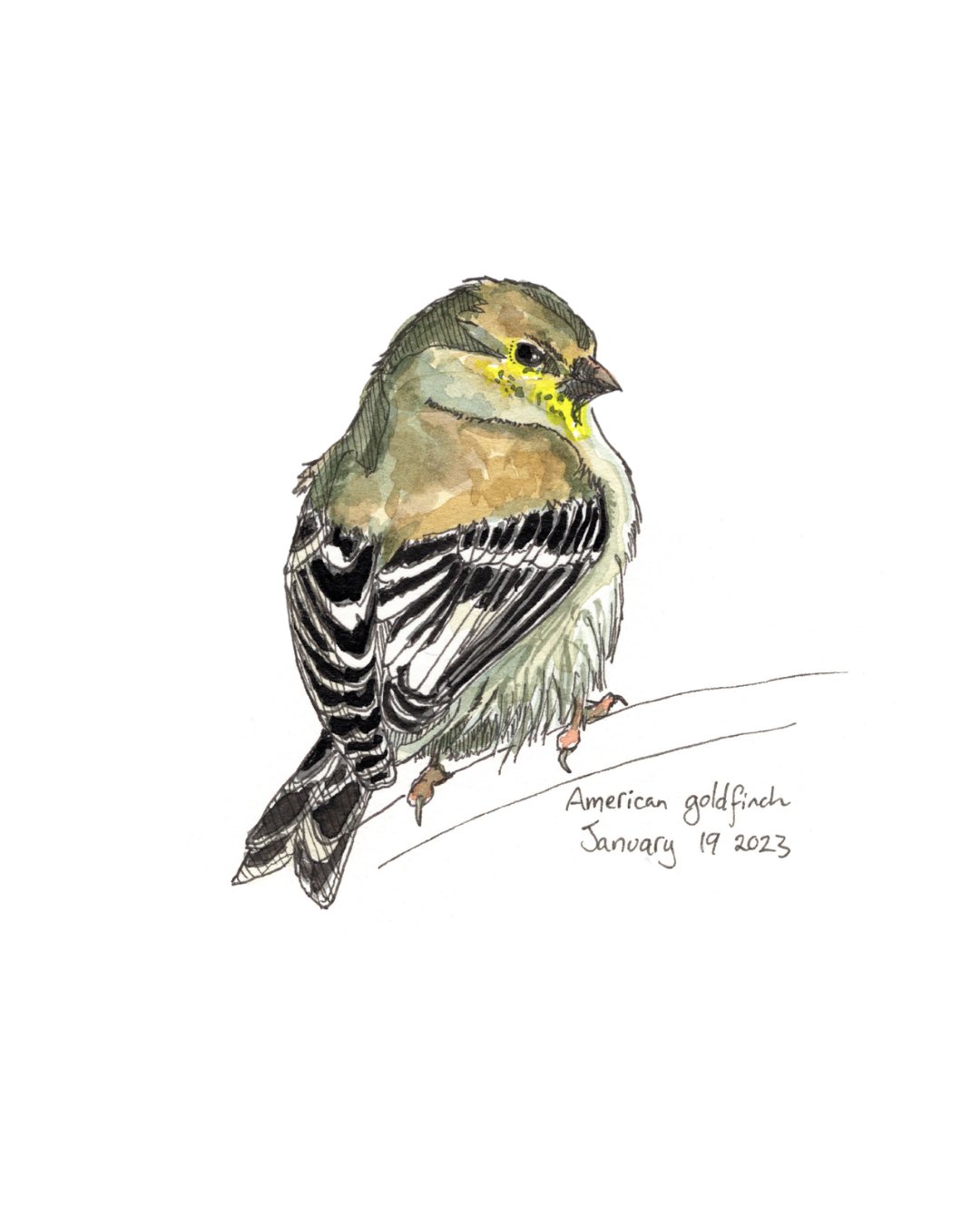
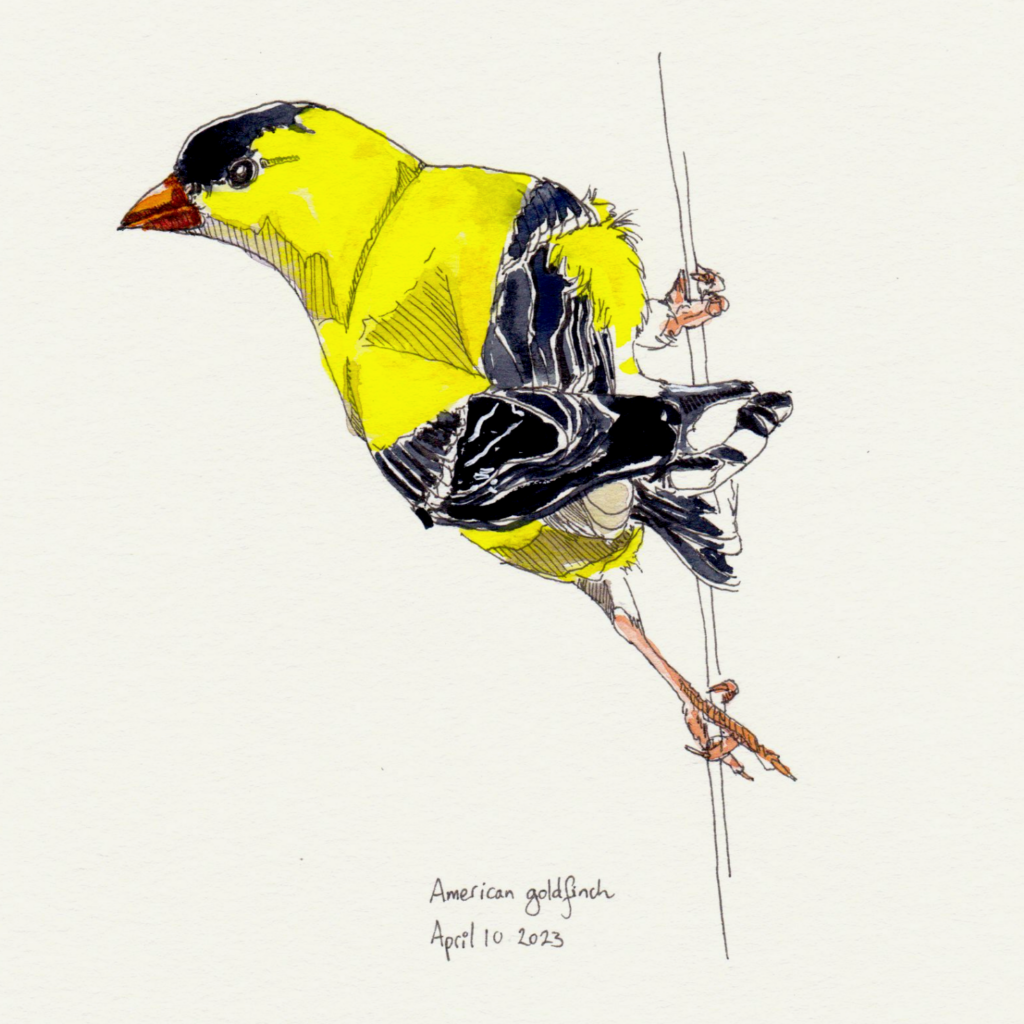
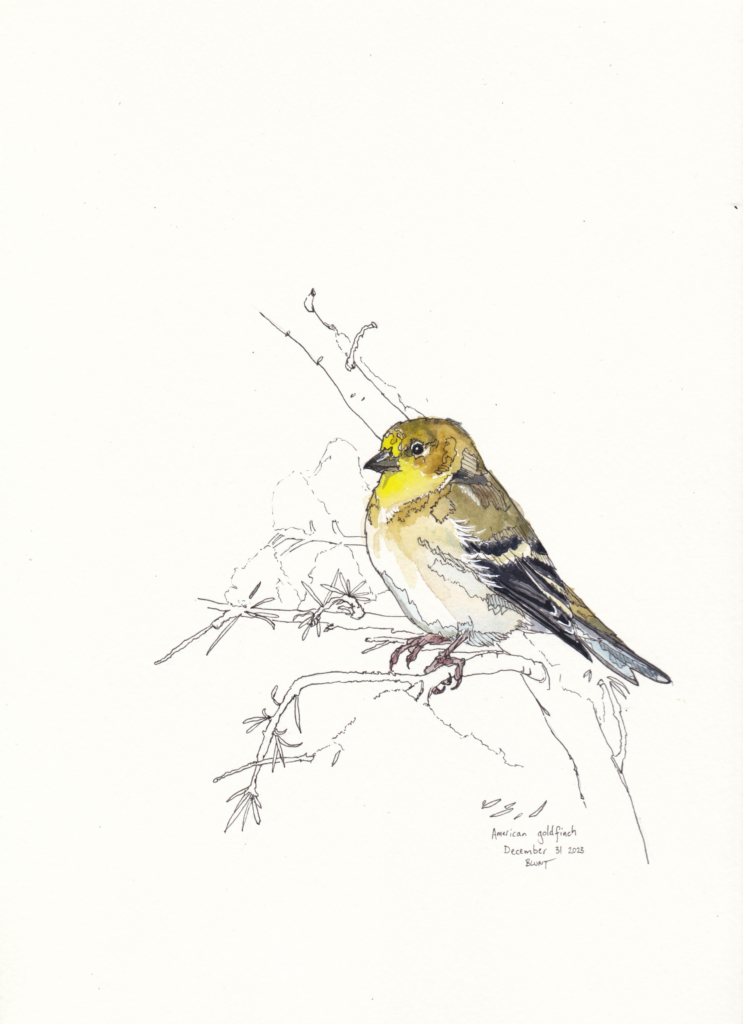
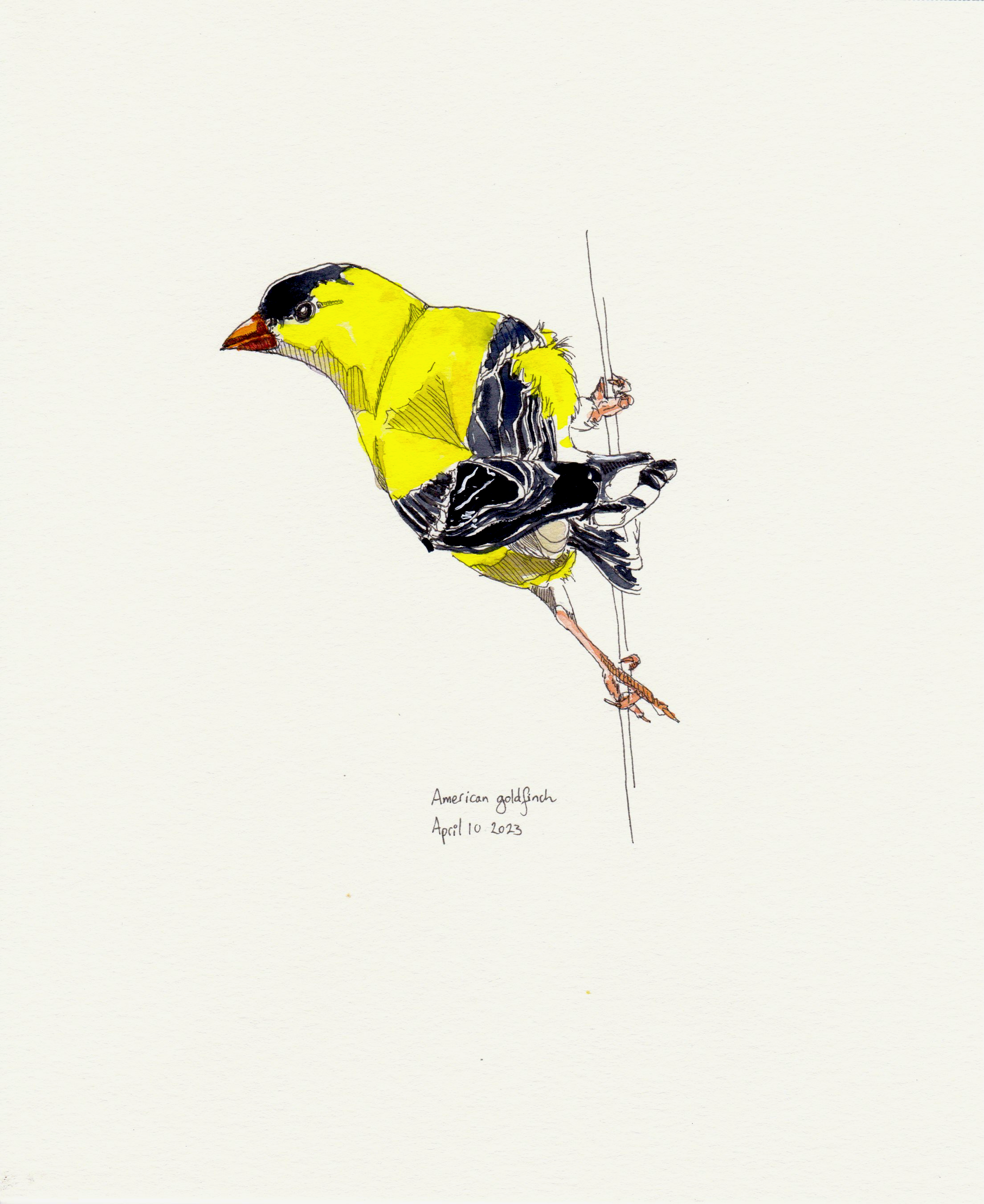
 By the time the seasons turned, I wasn’t just observing goldfinches I was in conversation with them. So when the largest flock I hosted during my year of birds arrived, twenty‑seven strong, it felt like I was among familiar characters. My backyard is typical of a 1960s suburban neighbourhood, yet these birds have adapted beautifully to living alongside us. Nyjer feeders guarantee visits, but gardens planted with echinacea, bee balm, and sunflowers offer a more natural invitation.
Goldfinches thrive in the weedy, meadow‑like edges created by our clearing, mowing, and reshaping of the land. Their success doesn’t mean the landscape is healthy; it simply shows how some species adapt to human activity while others disappear. Goldfinches may flourish in the habitats we create, but their adaptability shouldn’t distract us from the larger truth: the land is always responding to us, whether we notice or not. Their presence is a reminder that nature is not “out there.” It is here, woven into our daily lives, responding to our choices.
My thirteenth goldfinch was also my last bird of 2023. Ending the project with the species I began with felt right – a closing of the loop. Over the year, through repetition and attention, I found a way to bring their lightness and big personalities into my watercolours. I felt, finally, that I had communicated something true about their tenacity and their cycle.
Goldfinches are sometimes called “wild canaries,” a name tied to warnings and peril for humans. But I think their companionship offers a different kind of message. If we pay attention to the humble birds at our feeders, the ones we think we already know, we might rediscover our place in the balance we’ve disrupted. We might remember that stewardship begins not with rarity, but with relationship.
The American Goldfinch is common, yes. But it is also extraordinary. And if we let it, this small, bright bird can teach us how to live in the world we share.
Before you go, here are a few of my favourite goldfinch facts, the little details that delighted me while I drew them all year.
- They are obsessed with thistles, and nest late in June so they can add the thistledown to their nests and have copious food supply for their chicks.
- Bird name etymology: Carl Linneaus gave the American goldfinch the Latin handle of Spinus tristis or “sad finch”, in Anishinaabemowin the little bird is Aginjibagwesi “the one who counts leaves” and in French they are Chardonneret jaune, literally yellow thistle finch.
- They sing Po-ta-to-chip!
- The female goldfinch weaves her nest so tightly with spider webs, thistledown, and plant matter it can hold water.
- The collective noun for goldfinches is a charm.
Want to help Canadian species like finches and more? Stay tuned with the latest in Canadian nature by subscribing for email updates. You’ll receive regular updates about what we’re doing to protect Canadian nature and how you can help.
All artwork in this article is the intellectual property of Meredith Blunt and copyrighted, including misspellings.